
Showing posts with label philippines. Show all posts

Monday, June 25, 2018

What Makes A Green City?


A green city believes in eco-efficiency, local economic development, site resilience, and pedestrian and transit connectivity. The city is also clean, healthy, democratic, and well-governed. When an area becomes a green city, it significantly contributes to the citizens at large.

Living in a green urban environment is a trend. Modernization of real estate construction is almost at peak as architecture and development take in the needs of individuals along with the contribution of technology.

Realty developers are staying away from hazardous and unfriendly construction practices to build more sustainable and green properties like those in BGC Taguig. The real estate developments aim to save the environment and make it a top priority to build livable cities which that are easy to maintain.

There are four factors to look forward to in a green city. These factors create lasting property value for customers, investors, and stakeholders. Read more about these factors below to understand what makes a green city.

1. Sanitation


A clean and healthy environment involves establishments. The public and private sector are responsible for the safety and cleanliness of the community. A green city must continuously provide safe drinking water, manage effective wastewater treatment, refresh the air, and, maintain proper waste disposal.

These provisions are also the basic elements of a high-quality life in the city. These make the city liveable despite the negative externalities bought by modernization. Still, achieving a clean and healthy environment is not impossible. When the goal is two-way, fresh and healthy living becomes common to households in the community as well as establishments in the city.

2. Peace


A few marks of an ideal green city are open and intimate green pocket spaces, patrolled streets, and recreational parks. These features are essential for relaxation, sports, and social activities for wellness. They also encourage nature watching which has become a primitive way to enjoy the surroundings according to urban dwellers.

Places with plants and a nourishing environment are prevalent in urban cities because of the excessive noise from people, types of machinery, and vehicles. The environmental noise is a source of stress in the city. The level of stress will not decline as long as the rate of the demand for mobility grows annually. Cars, trains, and planes cause a level of noise that can be too much for the human body.

Reals estate developers must be aware of these stressors to include them in their vision for building a green city. They must fine-tune their advocacy to establish more properties catering to homebuyers and property seekers looking for open areas, peace, solitude, and safety in an urban environment.

3. Sustainability


Sustainability comes with efficiency. People and markets must maximize the resources in the area to conserve them for future inhabitants of the city. Energy and water must be readily available in the present and future as green cities are the ideal places to live and thrive. Doing this also minimizes problems of scarcity in the long run.

Besides water and energy, the presence of organic and naturally-grown products changes consumer habits and consumption patterns. An organic market Manila helps local entrepreneurs and sheds light to their product. Local entrepreneurship is an environmental-friendly way to shop and promote the craftsmanship and ideals in the community.

Several realty corporations push for efficiency and sustainability. They look towards green ways to make and build communities reserving resources and amplifying the importance of local industries. Home buyers and property seekers must research proper engineering and architectural strategies to find the right developer who can provide these services and wholesome green living expectations.

4. Organization


Management and governance is a must in an urbanized area. However, it must be democratic since the homes will be for the people. Citizens must be part of their household property and environmental decision-making. An individual must live in a place under proper management. At the same time, protection must be a priority for the communities.

Safety is one reason why a person buys a property, with the location as its second item on the list. Real estate developers are looking at these points to continue bringing out the best for their customers. They are also being mindful of finding more ways to maintain a well-managed location.


These are some of the examined factors of what makes a green city. Though a highly-urbanized area, green cities promote healthy living. They also contribute positively to society as sustainability became the blueprint to continuously enhance land, enrich the lives of more people, and provide economic benefits for the larger public.

Cooperation between home and property owners, developers and the government to improve existing cities eventually encourages neighboring communities to follow and push for green and eco-living establishments. Helping hands will bring these and other factors of making a green city for a lasting eco-friendly community.

Source: http://ec.europa.eu/environment/europeangreencapital/wp-content/uploads/2011/08/Making-our-cities-attractive-and-sustainable.pdf

This post was published on August 18, 2014 with the title "Green Cities: A Liveable and Sustainable Place to Live." This post was revised and updated for comprehensiveness and relevance to urban development.



Thursday, May 11, 2017

Are You Ready to Buy a Condo?


You might be so interested in buying one of Manila properties, or if not, you are considering that condo for rent Bonifacio Global City. You are probably thinking of living on your own, settling down with your better half or contemplating on the thought of investing. We have different reasons and stories why we are tempted to buy or rent a condo unit. Whatever your rationale is, you should ask yourself: “Am I ready to buy a condo?”

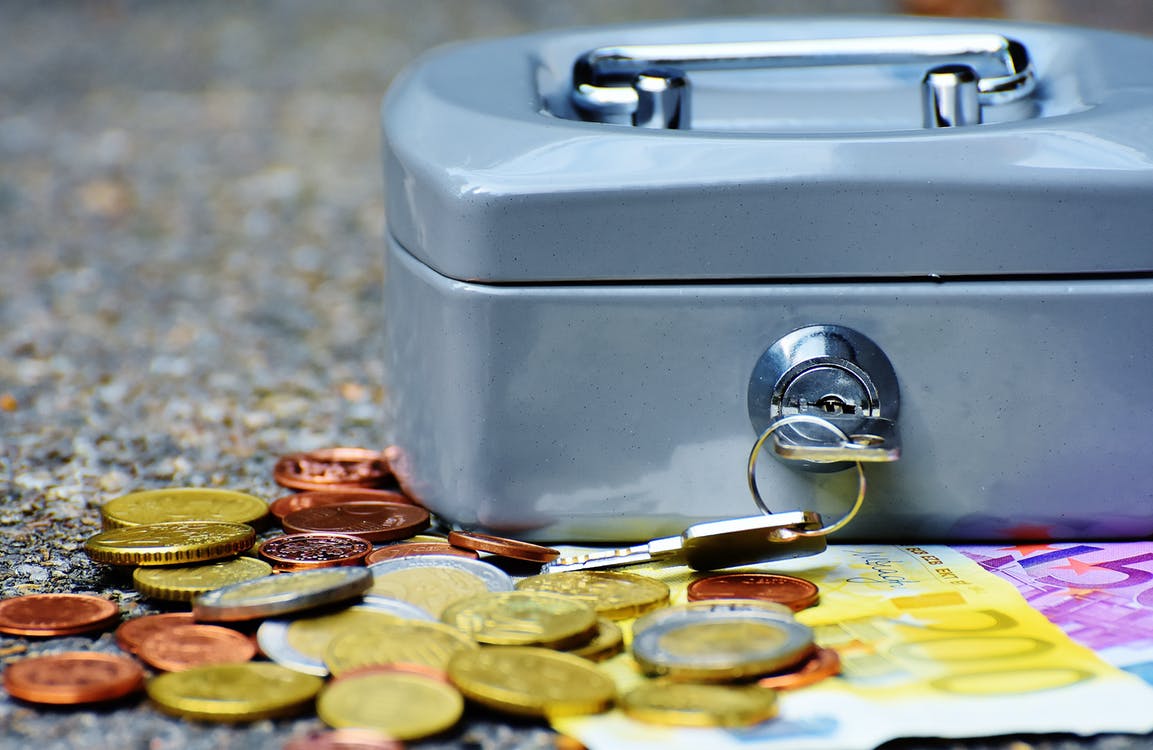
Just like any other big things you do, buying a condo unit needs to be thoroughly reviewed. In this article, let us focus on your financial readiness. Time to review your bank accounts and assets, and see if you can afford to buy a condominium unit.

How much can I afford?

We can't give you a definite answer on that big question as different factors or variables affect individual capacity on buying a condo unit.

According to real estate experts, you can use the “2.5 rule” to estimate how much you can afford. How does it work? Note your net monthly income, and multiply it by 12. After getting the product, multiply it by 2.5, and the answer will be the maximum amount of condo unit you may afford to pay or buy.

Example:

Your net monthly income is ₱ 30, 000.
₱ 30, 000 x 12 = ₱ 360, 000
₱ 360, 000 x 2.5 = ₱ 900, 000
Maximum amount of condo you may afford: ₱ 900, 000

This is just a rough estimation on the amount of condo unit you may purchase.

Not all people can buy a condo unit with one-time-big-time payment (you must be really lucky!), so most of us go to our banks and see how can they finance our condominium. But don't forget how banks love to know the exact figures and calculations. They will carefully compute your income against your expenses. More than the computations and numbers, the banks also love rules. One of which is that only 25% of your net monthly income should be devoted to housing.

Using our previous example, given that your net monthly income is ₱ 30, 000, you can save ₱ 7, 500 for your condo unit. Unfortunately, if you are earning ₱ 30, 000, you might want to think of other ways of earning to afford your dream condo unit since the computed ₱ 7, 500 should cover not only the amortization but also the other costs of living and owning in a condominium.

You should also remember that we can quickly know your net income but not your expenses. Our spending practices vary from time to time. There are a lot of factors that may affect your budgeting – emergency needs, needs and wants, and other priorities.

Along the way of getting your dream condo unit, sacrifices are inevitable. If buying a condo unit is your top priority, you might postpone your expensive vacation or delay your plan of purchasing a new car, or other pricey liabilities.

Another thing for you to note is what will happen if you suddenly lose your primary source of income? Even though this may be out of your control, you should be able to keep your commitment to pay no matter what happens. That is why you should also have a generous amount of savings allocated for your condo unit expenses. You should have saved at least six months worth of your monthly amortization just in case you will be losing your job or have a drastic change in your monthly spending.

For example, your monthly allocation for your condo is ₱ 20, 000, you should have at least ₱ 120, 000 in your savings account.


After knowing all these things and thinking about your current situation, can you confidently say “yes” if you're asked, “are you ready to buy a condo?” No worries if you can't answer that yet. You got enough time to start looking for more cost-effective condo units or have other sources of income to finance your goal of owning a condominium.

Wednesday, May 10, 2017

Philippines as an Avian Archipelago

The Philippines is one among the very few countries that is considered to have mega-diversity, from flora and fauna specifically when it comes to birds and mammals. Birdwatching in the Philippines is the current trend among the birders worldwide. Let’s discover further what these birders love about the avian diversity in the country.

A look at the statistics

In the Philippines, the avifauna totals to about 657 species, 214 species of which are endemic. Of these endemic species, 68 are globally threatened, 52 are accidental or rare, and 5 are introduced by humans. Specifically, there are 48 non-passerines and 35 passerines.
According to a Science Daily article, biologists worldwide already considers the Philippines as a ‘biodiversity hotspot.’ They also claim that the country might have a unique bird species than what is already known. About 31% of all bird species found in the Philippines are regarded as Philippine-only (or can be found in the Philippines exclusively).

Where to bird watch

Further, there are more than 200 bird-watching sites in the country in Luzon, Visayas and Mindanao with special mention in Palawan and Batanes.
The top bird-watching sites in the country are found in: Ilocos Norte, Cordillera Administrative Region, Cagayan, Pangasinan, Zambales, Bataan, Cavite, Pampanga, Laguna, Manila, Quezon, Bicol, Occidental Mindoro, Palawan, Negros Occidental, Negros Oriental, Batanes, Cebu, Bohol, Samar, Bukidnon, Agusan del Sur and Zamboanga.
For those who occupy Manila properties, the closest bird watching paradises are in Mt. Makiling Forest Reserve in Laguna, Mt. Palay-Palay National Park in Cavite and Las Piñas-Parañaque Critical Habitat and Ecotourism Zone. Another avifauna haven is in Wildlife and Bird Watching Sanctuary in Nuvali where you can see hundreds of bird species including herons and otters.

When to bird watch


Birding is possible all-year-round. However, it is best to visit the Philippines between December and July (dry season). During the wet season, it is tough to spot the majority of the birds though you can still watch or observe some species like pittas. Not to mention, terrains can get muddy, traveling to and fro the site will be more of a challenge.
Some local bird clubs also conduct bird festivals from time to time. Birders can contact these bird clubs to determine schedules.
The best time to bird watch is during the morning when they start to search for food. You should be up before 5 am.

Must-watch birds in the country

In the city, the most commonly observed birds are Eurasian tree sparrow, Yellow-vented bulbul, Olive-backed sunbird, zebra dove, black-naped oriole, golden-bellied flyeater and Philippine pygmy woodpecker.
However, there are must-see birds as well. Top of the list is the Philippine eagle. Others are Palawan peacock pheasant, steere’s pitta, Philippine cockatoo, scale-feathered malkoha, rufous hornbill, green racquet-tail, spotted wood kingfisher, Apo myna and Bukidnon woodcock.

What to bring when bird watching

When you embark on bird watching in any of the sites mentioned above, make sure to bring binoculars and camera with you. You should also bring a guide and journal where you can document the experience.
Also, bird watching is a hobby that is not for everybody. Patience is a virtue, and it holds true for this hobby. If you cannot stand long hours of silence, you might as well give it up. Respect for the birds and their natural habitat are also necessary.


The Philippines is a home to hundreds of bird species, each one of which has its own distinct beauty. Our avian bionetwork is legendary, making the entire archipelago as the latest bird watching hotspot. There are many choices for bird watching sites even in and around the metro. While bird watching is a worthwhile activity, this is not for everybody. It takes drive patience and passion to be a bird watcher!